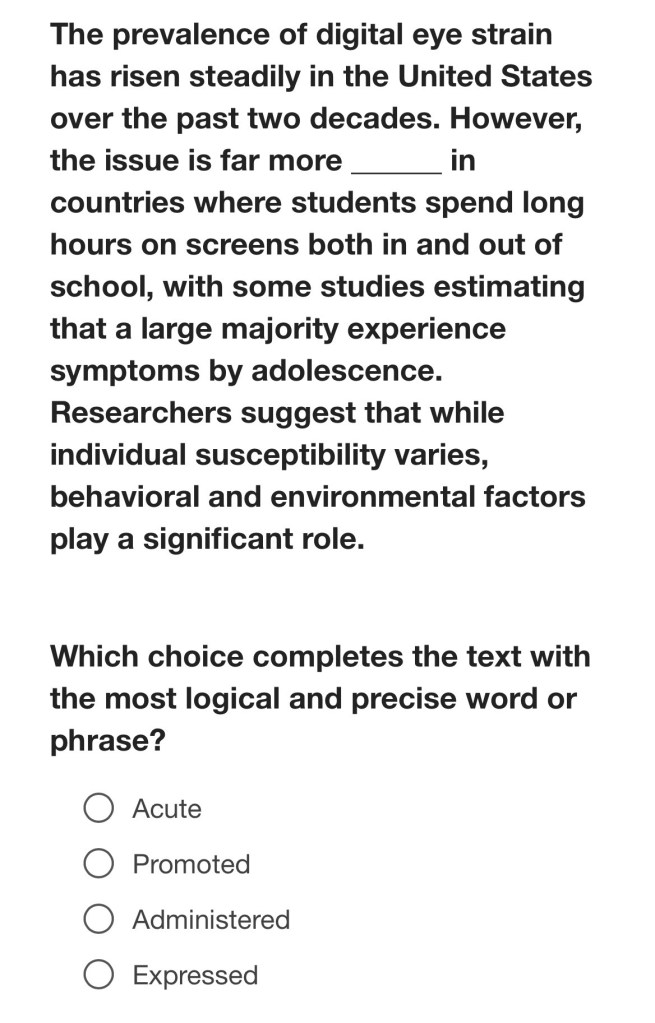
The way you have been trained to read for school is not the way you should read on the SAT. That is not a criticism of your English teachers, nor does it negate all of the reading you have done that has made you a successful student. It is just that reading for your classes and reading for the SAT are two different approaches. One–reading for classes–rewards depth, interpretation, and complete understanding. Meanwhile, reading for
Answer the Question Before You Read the Choices One of the most valuable habits a strong SAT test taker can develop is knowing what the correct answer needs to say before looking at the choices. That’s what a prediction is. Not a guess, not a hunch, not a feeling about which option seems right. A prediction is a short statement, built entirely from evidence in the passage, of what the correct answer must say. Once
SAT Reading and Writing Strategy: Why Every Correct Answer Can Be Proven
Category: General Reading and Writing
Every correct answer on SAT Reading and Writing can be proven with evidence from the text. For Reading questions, that proof comes directly from the passage. For Writing questions, it comes from the sentence’s grammatical structure or the rhetorical task you are being asked to complete. This might sound like a minor technical detail, or perhaps even like an obvious statement, but it is actually the single most useful fact you can know about SAT
Intuition fails on the SAT for a simple reason: many of the test’s wrong answers are designed to feel plausible. When your gut is the thing deciding, you are playing right into the test makers’ hands. This is why for students trying to improve their SAT Reading and Writing score, one of the most important shifts is learning to choose answers based on textual evidence rather than what sounds right. What Intuition Actually Is (And
Lesson Snapshot Learn why SAT Words in Context questions test reading comprehension—not memorized vocabulary—and how to use the sentence itself to determine meaning. You’ll Learn: ✓ Why the most familiar definition of a word is often the wrong answer. ✓ How to use context and structural clues to determine what a word means in a specific sentence. ✓ Why prefixes, roots, and suffixes are more useful than memorizing random vocabulary lists. Simply put, Words in